
Key Factors to Consider When Choosing the Right Rebars for Your Construction Project
Selecting the right reinforcement material is one of the most important decisions in any construction project because it directly affects structural safety, durability, and long-term performance. Reinforced concrete relies on steel reinforcement to compensate for concrete’s natural weakness under tension, allowing buildings, bridges, and infrastructure to withstand heavy loads, environmental stress, and long-term wear.
Selecting the appropriate reinforcement is not simply a matter of cost or availability. It requires a comprehensive understanding of engineering demands, environmental exposure conditions, fabrication standards, and long-term performance expectations to ensure structural reliability. When the wrong material is chosen, it can lead to serious issues such as cracking, corrosion, reduced load-bearing capacity, and even premature structural failure over time. In contrast, properly selected reinforcement enhances overall structural integrity, extends the service life of the project, and reduces long-term maintenance requirements, making the structure more efficient and cost-effective throughout its lifespan.
According to a study from International Journal of Advances in Scientific Research and Engineering, fourteen and twenty-four samples of supposed mild steel rebars and high yield steel rebars were tested in compression. Half of this was tested for a height-to-diameter ratio of 1, and the other half was tested for a ratio of 2. The result revealed for a ratio of 2 for the high yield steel where of grade.
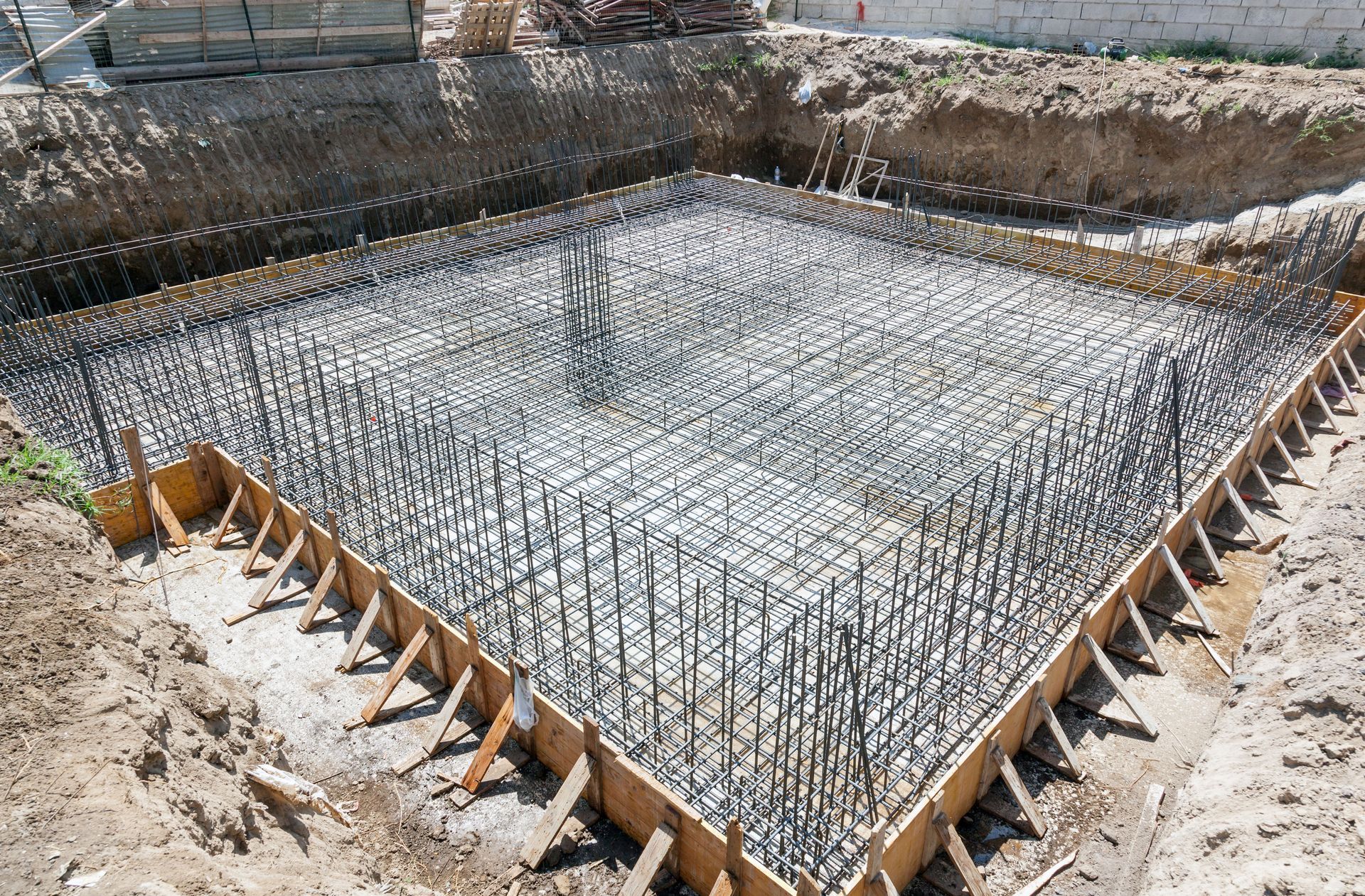
In modern construction practices, steel reinforcement plays a central role in nearly every structural application, from foundations and columns to slabs and retaining structures. Because of this, decision-makers must evaluate multiple technical and environmental considerations before finalizing material selection.
Material Strength Considerations
One of the most critical aspects of reinforcement selection is material strength. The ability of steel to resist tension forces determines how effectively it can support concrete under load. Concrete is strong in compression but weak in tension, so reinforcement must bridge that gap by carrying tensile stresses that would otherwise cause cracking or structural failure.
Strength performance is influenced by several factors, including the steel’s internal composition, heat treatment process, and manufacturing method. High-quality steel typically offers improved yield strength and better deformation control under stress, which helps maintain structural stability even under dynamic loads such as traffic, wind, or seismic activity.
Environmental Exposure Conditions
Environmental conditions play a major role in determining the long-term performance of steel reinforcement. Exposure to moisture, chemicals, temperature fluctuations, and airborne contaminants can significantly affect durability if not properly addressed during material selection.
In coastal environments, salt exposure accelerates corrosion processes, which can weaken reinforcement over time. In industrial zones, chemical pollutants in the air or soil can also contribute to degradation. Even in inland environments, moisture infiltration and freeze-thaw cycles can create stress within concrete structures that eventually impacts the embedded steel.
To mitigate these risks, protective measures such as coatings, galvanization, or epoxy layers are often used. These treatments create a barrier between the steel surface and external elements, reducing the likelihood of corrosion initiation. However, selecting the correct protection method depends on a careful assessment of the project environment and expected exposure severity.
Proper concrete cover thickness and mix design also contribute to environmental resistance. Dense, low-permeability concrete reduces water ingress, which in turn helps protect internal reinforcement. When environmental factors are thoroughly evaluated, long-term structural durability improves significantly, reducing maintenance costs and extending service life.
Diameter And Configuration Selection
The physical dimensions and layout of reinforcement significantly influence how loads are distributed throughout a structure. Diameter selection affects load-bearing capacity, while spacing and placement determine how forces are transferred between concrete and steel.
Larger diameters generally provide higher resistance to tensile forces, making them suitable for heavily loaded structural elements such as columns and foundations. Smaller diameters are often used in distributed reinforcement systems where load is spread across a wider area, such as slabs or walls.
Configuration is equally important. Proper spacing ensures that stress is evenly distributed, preventing localized cracking or weak points within the concrete matrix. Incorrect spacing can lead to uneven load transfer, resulting in premature structural fatigue.
Bending and shaping also play a role in performance. Reinforcement must often be formed into specific shapes to accommodate architectural design requirements. Care must be taken to ensure that bending processes do not compromise material integrity, as improper handling can introduce weak points.
Effective configuration planning requires coordination between structural engineers and construction teams to ensure that reinforcement placement aligns with load paths and design intent.
Steel Grade And Performance Reliability
Steel grade is a defining factor in determining how reinforcement behaves under different loading conditions. Higher-grade steel typically offers improved strength, better ductility, and more consistent performance under stress, making it suitable for demanding structural applications.
Performance reliability is not only about strength but also about predictability. Engineers rely on consistent material behavior to ensure that structural calculations match real-world performance. Variability in steel quality can introduce uncertainty, which increases risk in critical infrastructure.
In one documented research study from the International Journal of Advances in Scientific Research and Engineering, fourteen and twenty four Samples of supposed mild steel rebars and high yield steel rebar, where tested in compression. Half of this was tested for height to diameter ratio of one and the other half tested for a ratio of two. The result revealed for a ratio of two that the high yield steel where of grade. This highlights how performance differences between material types become more evident under varying structural conditions and testing scenarios.
Such findings emphasize the importance of verifying material classification before use. Relying solely on visual inspection or supplier labeling can introduce risk, especially in large-scale projects where structural failure would have serious consequences.
Construction Design Compatibility
Reinforcement must integrate seamlessly into the overall structural design of a project. Compatibility ensures that load paths, architectural intent, and engineering calculations work together effectively to produce a stable structure.
Structural systems are designed based on predicted load distribution, and reinforcement must support those predictions without introducing inconsistencies. Proper integration ensures that forces are transferred efficiently through the concrete and into supporting elements such as columns and foundations.
Complex architectural designs often require customized reinforcement arrangements. Curved structures, irregular geometries, and large open spaces all demand careful planning to ensure that reinforcement placement aligns with stress distribution patterns.
In addition, constructability must be considered. Even the most well-designed reinforcement plan must be practical to install on-site. Clear detailing, proper spacing, and accessible placement all contribute to smoother construction workflows and reduced installation errors.
Quality Assurance And Supply Chain Factors
Quality assurance is essential to ensuring that reinforcement performs as expected throughout its service life. Consistency in material production ensures that each batch meets required performance standards and behaves predictably under stress.
Manufacturing processes must be carefully controlled to avoid inconsistencies in composition or structural integrity. Reliable testing procedures help confirm that materials meet engineering specifications before they are delivered to construction sites.
Selecting reinforcement material is a complex process that requires careful evaluation of strength, environmental exposure, physical configuration, material grade, design compatibility, and supply chain reliability. Each factor contributes to the overall performance and durability of a structure, and overlooking even one can compromise long-term safety.
When all considerations are properly addressed, reinforced concrete structures achieve greater resilience, improved load capacity, and extended service life. Thoughtful planning at the material selection stage ultimately leads to safer and more efficient construction outcomes.
At Direct Source Supply, we are committed to providing dependable reinforcement solutions that support the strength, durability, and performance demands of modern construction projects from the ground up.



Share On: